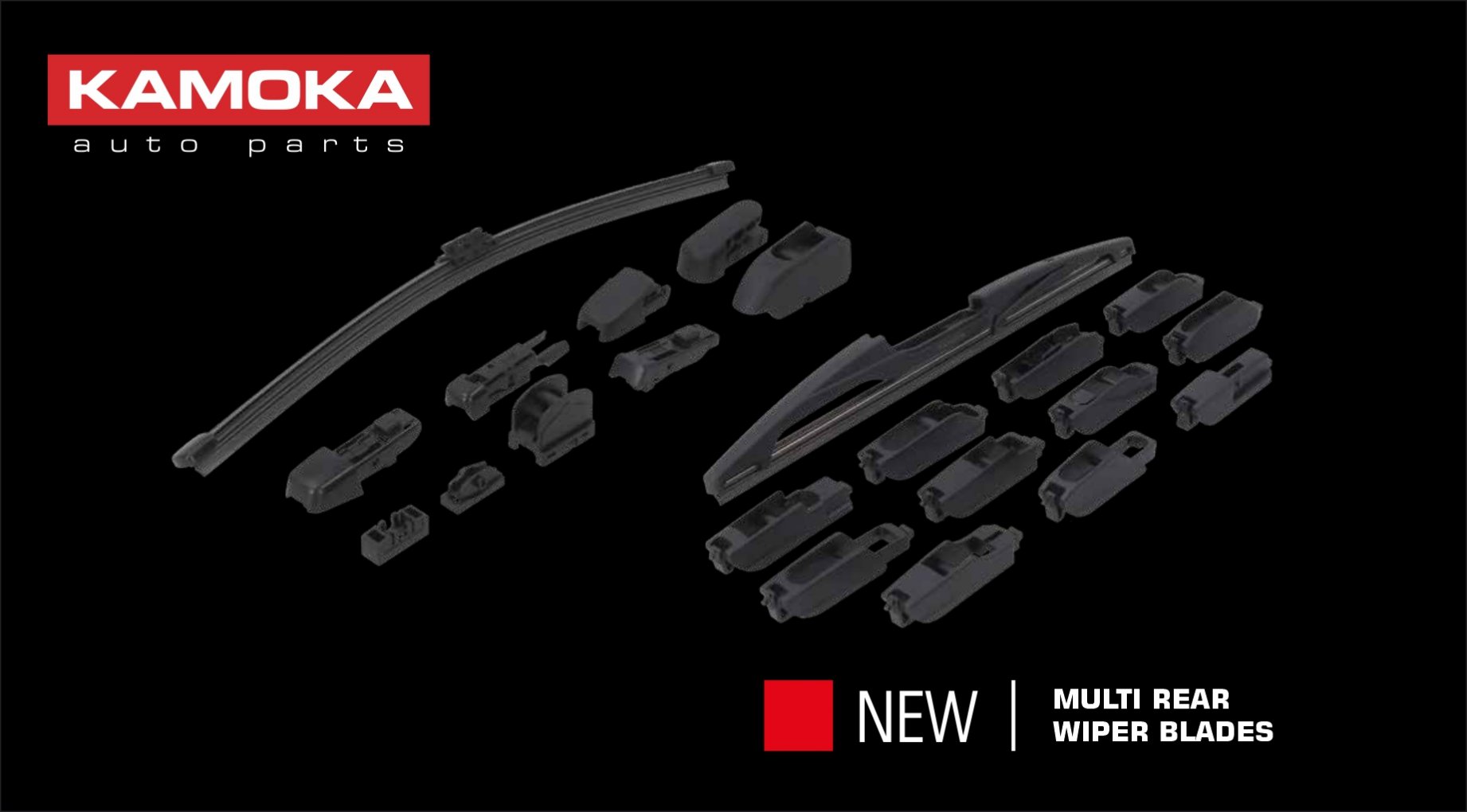
MULTI REAR WIPER BLADES KAMOKA
- 12.06.2026
KAMOKA is expanding its product range to include rear multi-adapter wipers. This new product line has been designed for repair shops, distributors, and users seeking practical and versatile solutions for passenger cars and light commercial vehicles.
The rear wiper is a component that is often overlooked during routine vehicle maintenance, even though it plays a significant role in driving safety and comfort. It is responsible for clearing the rear window of water, mud, dust, snow, and other debris that accumulates during daily use. A properly functioning rear wiper improves rear visibility, facilitates maneuvering, reversing, parking, and monitoring the area behind the vehicle.
KAMOKA offers multi-adapter rear wipers, which, thanks to a wide range of adapters, fit many car models. The multi-adapter solution reduces the number of variants needed in stock while making it easier to select the right wiper for a specific vehicle. This is particularly important for workshops and distributors that service many different car brands and models.
The range includes 14 SKUs, allowing the product to be adapted to various mounting types and rear wiper designs. Example product codes include 280001, 280003, 280003 for flat blades and 280101, 280102, 280103 for skeleton blades. As a result, the range includes both modern solutions used in many newer vehicles and classic variants used in older designs.
KAMOKA multi-adapter rear windshield wipers are designed for quiet operation. This is important because a worn-out or poorly matched wiper can cause squeaking, skipping across the glass, arm vibration, or uneven operation. Such symptoms not only reduce driving comfort but may also indicate reduced water-sweeping efficiency.
A key feature of KAMOKA wipers is precise water removal. The rear window in many cars is particularly prone to dirt, especially in hatchbacks, station wagons, SUVs, and vans. When driving, an air vortex forms behind the vehicle, causing water, dust, and mud to settle precisely on the rear of the body. Under such conditions, a properly functioning rear wiper directly impacts visibility and driving comfort.
A well-chosen wiper should fit snugly against the windshield and effectively remove water from the entire working surface. If the wiper blade is worn, hard, warped, or does not fit the arm properly, streaks, water marks, or uncleaned areas may remain on the windshield. In practice, this can make it difficult to judge distances when reversing, use the rearview mirror, and observe vehicles behind the car.
KAMOKA wipers fit most cars thanks to a wide range of adapters. This solution is practical for both retail sales and workshop use. Instead of selecting a separate wiper designed exclusively for a single mounting type, you can use a product designed for multiple applications. The appropriate adapter ensures proper installation of the wiper on the arm, and the correct fit ensures stable operation and effective contact between the blade and the windshield.
Rear wipers are particularly prone to wear and tear resulting from operation in harsh conditions. They often remove not only rain but also road grime, deposits, salt, sand, dust, and residues of snow and ice from the windshield. A wiper operating on a dirty surface wears out faster, so it’s worth regularly checking the condition of the blade and the rear windshield itself.
Signs of rear wiper wear are easy to spot. The most common symptoms include streaks, uneven water removal, squeaking, vibration, the wiper blade skipping across the glass, or leaving wet patches in the field of view. It also happens that the wiper blade rubber cracks, warps, or detaches from the blade frame. In such a situation, the wiper should be replaced, as continued use may impair visibility and cause discomfort while driving.
Regular replacement of the rear wiper is especially important in the fall and winter, when the rear window is more frequently covered with water, slush, and road salt. A properly functioning wiper helps maintain visibility when reversing, parking, and driving in the rain. This is important not only on the highway but also in city traffic, where the driver often relies on the rear window during maneuvers.
KAMOKA multi-adapter rear wipers are also ideal for heavily used vehicles, such as fleet cars, delivery vans, family cars, or vehicles used on long-distance trips. In such vehicles, the rear wiper operates frequently, and its condition can deteriorate quickly due to dirt and changing weather conditions.
An important advantage of the KAMOKA range is the option to choose between flat and skeleton blades. Flat blades are often used in newer designs and stand out for their modern appearance and even pressure against the windshield. Skeleton blades remain a popular solution in many older vehicle models and are still widely used in rear wipers. This allows the product range to meet the needs of various vehicle groups.
When installing a wiper, it is important to ensure the correct adapter is selected and that the blade is properly seated on the arm. An incorrectly installed wiper may operate erratically, make noise, or fail to clear water across the entire windshield surface. After installation, it is a good idea to test its operation using windshield washer fluid and ensure that the blade moves smoothly and thoroughly cleans the windshield.
KAMOKA rear multi-adapter wipers are a practical addition to the brand’s lineup of visibility systems. Quiet operation, precise water removal, and a wide range of adapters make it easier to select the right product and support safe vehicle operation in various weather conditions.
With 14 part numbers, the range allows for more efficient procurement of parts needed for routine vehicle maintenance. This is a convenient solution for workshops, automotive stores, and distributors who want to stock products suitable for a wide range of applications.
KAMOKA multi-adapter rear windshield wipers are now available in the brand’s product range. Detailed applications can be found in the catalog and through KAMOKA distributors.